Category: Medicinal Science

Auto Added by WPeMatico

  • Curcumin loaded Silica Nanoparticles and their therapeutic applications: A review

    Curcumin loaded Silica Nanoparticles and their therapeutic applications: A review

    Curcumin loaded Silica Nanoparticles and their therapeutic applications: A review

    urn:nbn:sciencein.jmns.2020.v7.99

    Published in: Journal of Materials NanoScience

    • Parul Pant

      University of Delhi

    • Dr. Chetna Gupta

      University of Delhi

    • Sagar Kumar

      Indian Institute of Science

    • Apoorva Grewal

      University of Delhi

    • Shivani Garg

      University of Delhi

    • Aishwarya Rai

      University of Delhi

    Keywords:

    Silica, Nanoparticles,
    trumeric, drug delivery, cancer,
    diabetes, nanomedicine, biomedical science

    Abstract

    Silica nanoparticles offer a promising platform for the delivery of drugs, in particular for the drugs which lack water solubility, target capability and have non-specific distribution, systematic toxicity and low therapeutic index. In this review, we focus on the synthesis and therapeutic (particularly, anti-cancer) applications of Curcumin loaded Silica Nanoparticles. Various surface modifications of silica nanoparticles have been discussed that are used to enhance their therapeutic applications. The characterization techniques and study of their biocompatibility have also been presented.

    Curcumin Silica Nanoparticles

    Cite as: Pant, P., Gupta , C., Kumar, S., Grewal, A., Garg, S., & Rai, A. (2020). Curcumin loaded Silica Nanoparticles and their therapeutic applications: A review. Journal of Materials NanoScience, 7(1), 1-18.

    Retrieve full text from http://thesciencein.org/journal/index.php/jmns/article/view/99 and/or http://pubs.iscience.in/journal/index.php/jmns/article/view/989
  • Contemporary advances in therapeutic portfolio of 2-Azetidinones

    Contemporary advances in therapeutic portfolio of 2-Azetidinones

    Contemporary advances in therapeutic portfolio of 2-Azetidinones

    URN:NBN:sciencein.cbl.2020.v7.98

    Published in Chemical Biology Letters

    • Rajneesh Kaur

      Maharishi Markandeshwar (Deemed to be University)

    • Dr. (Mrs.) Raman Singh

      Maharishi Markandeshwar (Deemed to be University)

    • Priyanka Ahlawat

      Maharishi Markandeshwar (Deemed to be University)

    • Parul Kaushik

      Maharishi Markandeshwar (Deemed to be University)

    • Kuldeep Singh

      Maharishi Markandeshwar University

    Keywords:

    β-lactams, monobactam,
    antimicrobial drug resistance, biological activity,
    multi target drugs

    Abstract

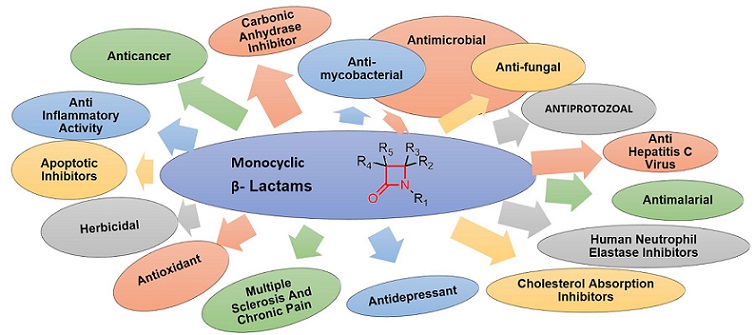
    The heterocycle moieties form the site of reaction in many enzymes and co-enzymes and also act as an important pharmacophore in the pharmaceutical drug designs. 2-Azetidinones are the 2-carbonyl derivatives of azetidine, more commonly known as β-lactams. These structural entities occupied a central role in the vigil against bacterial infections over the past few decades. A subclass of these heterocyclic systems, monobactams or monocyclic β-lactam derivatives exhibits several biological activities including antibacterial, antifungal, antiprotozoal, anti-mycobacterial, anti-HIV, antiviral, antimalarial, antioxidant, apoptotic inhibitors, anti-inflammatory activity, anticancer activity, herbicidal activity, etc. Monobactams has resistant to the β-lactamase enzyme and could be a reasonable starting point for developing new drugs or inhibitors. In the present review, pharmacological activities of monocyclic β-lactam derivatives have been discussed with respect to current research in the structure-activity relationships in different therapeutic areas.

    b-lactam derivatives as drug

    Cite as: Rajneesh, K., Singh, R., Ahlawat, P., Kaushik, P., & Singh, K. (2020). Contemporary advances in therapeutic portfolio of 2-Azetidinones. Chemical Biology Letters, 7(1), 13-26.

    Retrieved full text from http://thesciencein.org/journal/index.php/cbl/article/view/98 and/or http://www.pubs.iscience.in/journal/index.php/cbl/article/view/987

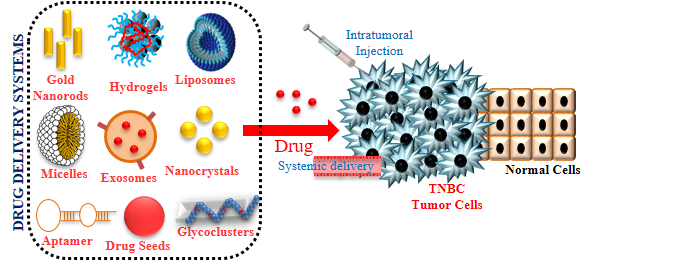
  • Current advances in drug delivery systems for treatment of Triple negative breast cancer (TNBC)

    Current advances in drug delivery systems for treatment of Triple negative breast cancer (TNBC)

    Current advances in drug delivery systems for treatment of Triple negative breast cancer (TNBC)

    urn:nbn:sciencein.cbl.2020.v7.96

    Published in: Chemical Biology Letters

    • Pooja Mittal

      University of Delhi

    • Sujata Singh

      University of Delhi

    • Archana Singh

      University of Delhi

    • Indrakant K. Singh

      University of Delhi

    Keywords: Drug delivery, Nanomedicine, Nanobiotechnology, Liposome, Nanoparticles, Hydrogels, Aptamer

    Abstract

    Triple negative breast cancer, the most malignant and aggressive form of breast cancer, is accompanied with poor prognosis in patients. Characterized by the absence of expression of estrogen receptor, progesterone receptor and human epidermal growth factor receptor-2, TNBC cells are unresponsive to hormonal therapy. With only cytotoxic chemotherapy drugs as an established treatment option, tumor-targeted delivery of drugs becomes an important parameter to prevent or attenuate chemotherapy-associated side effects and toxicity in TNBC patients. Despite the current advances in TNBC-targeting drug delivery systems (TNBC-TDDS), the treatment outcome remains relatively low. These systems face challenges of drug instability and decreased drug-loading potential. In addition, further investigations are required to address formulations, route of administration, frequency of disease recurrence and non-target side effects, apart from cutting down the cost of development. This concise review summarizes the most recent findings in the field of TNBC-TDDS and highlights the future directions and research perspectives.

    Drug delivery system for breast cancer

    Cite as: Mittal, P.; Singh, S.; Singh, A.; Singh, I. K. Current Advances in Drug Delivery Systems for Treatment of Triple Negative Breast Cancer (TNBC). Chem Biol Lett 2020, 7(1), 1-12.

    Retrieve Full text from:

    http://www.pubs.iscience.in/journal/index.php/cbl/article/view/941

    http://thesciencein.org/journal/index.php/cbl/article/view/96

  • Current Pharmaceutics

    Announcing the new journal for pharmaceuticals sciences covering

    • pharmaceutical chemistry,
    • medicinal chemistry,
    • pharmacology,
    • toxicology,
    • drug evaluation,
    • pharmaceutical sciences,
    • drug development,
    • regulatory affairs,
    • drug delivery,
    • clinical studies, and
    • all aspects of pharmaceuticals and therapeutics sciences.

    Type: International, Peer review

    Start Year: 2020/21

    See more details about journal and submission at

    http://thesciencein.org/journal/index.php/cp

  • Monocrotophos induced Biochemical and Histopathological alterations in the Kidney tissues of Mice

    urn:nbn:sciencein.cbl.2019.v6.115

    Monocrotophos induced Biochemical and Histopathological alterations in the Kidney tissues of Mice

    Published in: Chemical Biology Letters

    • Suman Devi

      Maharshi Dayanand University

    • Jagjeet Singh

      Maharshi Dayanand University

    • Vijay Kumar

      Maharshi Dayanand University

    • Vinay Malik

      Maharshi Dayanand University

    Keywords:

    histopathology, oxidative stress,
    kidney, lipid peroxidation, toxicology

    Abstract

    The present study investigated the effect of monocrotophos, a commonly used organophosphate pesticide exposure in the kidney tissues of the swiss albino mice. Monocrotophos was administered at the sub-lethal doses of 1.25mg/kg, 2.5 mg/kg and 5.0 mg/kg body weight for 24 hr. Monocrotophos toxicity generated oxidative stress in the mice as evidenced by significant decrease in the activities of glutathione, superoxide dismutase and catalase enzymes. The exposure increased the lipid peroxidation and protein oxidation in a dose dependent manner. Oxidative stress generation also elicited cytotoxic effects on the mice kidney which were supported by the histopathological changes like degeneration in glomerulus, bowmen’s capsule and tubules, hemorrhage, mononuclear cell infiltration, tubular cast and congested blood vessels in a dose-dependent manner. In conclusion, the study indicated that monocrotophos exposure at various doses induces significant deleterious health effects in mice kidney tissues via oxidative stress generation.

    Cite as: Devi, S., Singh, J., Kumar, V., & Malik, V. (2019). Monocrotophos induced Biochemical and Histopathological alterations in the Kidney tissues of Mice. Chemical Biology Letters, 6(2), 39-45.

    Retrieved full text from http://pubs.thesciencein.org/journal/index.php/cbl/article/view/115